How Much Protein Do Teens Really Need? A Parent’s Guide
Protein, Protein, and Protein.
It seems like everyone is talking about protein. People value protein for weight loss, muscle gain, building lean tissue or just for general good health and wellbeing. Whether it is in the form of food or protein shakes, individuals are striving to include more protein in their diet.Why all the hype?
Protein plays a critical role in the body, from building muscle to supporting the immune system. And while the body doesn’t need large amounts compared to some expectations, it does need protein consistently - especially during the adolescent years.
Teenagers go through rapid growth and development. Add busy school schedules, sports, and social activities, and their bodies rely heavily on steady nutrition. Protein becomes essential for supporting both growth and daily performance.
What Is Protein?
Protein is an essential macronutrient that provides energy to the body. Like carbohydrates, each gram of protein gives us 17 kJ1. When the protein in our food is digested it is broken down to its simplest form – amino acids. There are twenty amino acids that combine to form different kinds of protein structures. They are not stored in the body, so they either need to be made from scratch or they need to be made available from food.Most amino acids can be made in the body from other molecules. But, there are nine essential amino acids that your body cannot make. They are: histidine, isoleucine, leucine, lysine, methionine, phenylalanine, threonine, tryptophan, and valine. They have to come from the food you eat.
Amino acids are the building blocks of all proteins; protein provides the structure for numerous tissues and molecules in the body. The most familiar job of protein is to build and repair muscle tissue. Protein is also used in bone, skin, hair, nails and connective tissue – cartilage and tendons. Without protein we would have no enzymes, hormones or antibodies.
Clearly, protein is an essential nutrient for the entire human body. If our needs are not being met, things can start going wrong.

Protein In Food
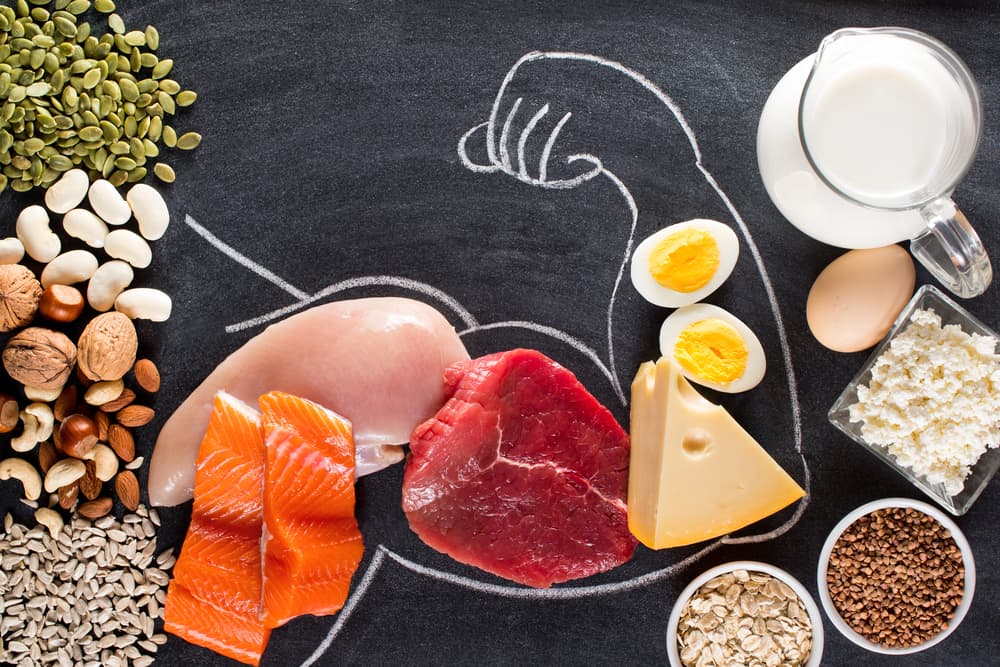
All the protein we need can be provided by the food we eat. There is a variety of dietary sources of protein:- Animal protein: Meat, fish, chicken, eggs and dairy products. Animal protein is a complete protein. In other words it provides the body with the entire spectrum of amino acids – both non-essential and essential.
- Plant protein – Beans, lentils, chickpeas, tofu, nuts, seeds and wholegrains. Plant proteins generally contain lower amounts of certain essential amino acids. E.g. beans contain lower amounts of the essential amino acid methionine. The latter is present in grain, nuts and seeds. That is why it is recommended to consume protein from a wide variety of sources if one is following a plant-based diet.
- Protein powders/shakes – The protein in protein powders and shakes is derived from egg, milk or plant sources such as peas, nuts or seeds. Products are formulated to provide a complete protein supplement that provides the body with the full range of amino acids.

How Much Protein Does Your Teenager Need?
With all the hype over protein you would think that our protein requirements are high. In fact, the amount the body needs to meet its needs is actually quite small. Protein is a source of energy, but its primary functions are to build and repair body tissues, and to produce enzymes, antibodies and hormones.The World Health Organisation recommends that teenagers eat approximately 0,9g of protein per kilogram of body weight. So, if your child weighs 70kg, they will need 63g of protein per day. If the only protein source was chicken, for example, that would be 360g of chicken. Thirty to forty grams of protein food contains roughly seven grams of protein. The recommendation for girls drops to 0,8g of protein per kilogram per day between the ages of fifteen and eighteen.
A teenager’s protein requirement is higher than that of an adult. Protein is essential to support the growth and development that takes place in the teen years. Our teens are also very busy with school and sports. Their diet needs to keep up with them so that they can give their best effort in the classroom and on the sports field.
Overall you are aiming for your teen to get between ten and thirty percent of their daily energy from protein. Research has shown that it is best to spread it out evenly throughout the day, splitting the protein requirement across all meals.
A Simple Day of Protein for Teens
Breakfast: Poached eggs on wholewheat toast with grilled tomato
Lunchbox: Cheese, lettuce and cucumber sandwich, a handful of nuts and an apple
Lunch: Chickpea and butternut salad with pumpkin seeds
Snack: Yoghurt, hummus on whole wheat crackers and a banana
Dinner: Grilled fish, baby potatoes and lots of veggies
P.S. If your child struggles to eat regular, balanced meals, or is a fussy eater a product like MaxiMeal can help support overall nutrition. It’s not just about protein - it provides a balance of macronutrients and micronutrients to help fill gaps on busy days when full meals are missed.
Protein Is An Essential Nutrient For Teens
Meeting your child's protein needs supports:
- Healthy growth and development
- Physical performance
- Daily energy and focus
The key is not excessive protein, but consistent, balanced intake across the day.
Protein is essential - and in the right amounts, it fully earns its reputation.
FAQ's
1. What does protein do in a teenager’s body?
Protein supports growth, muscle repair, hormone production, and immune function during the rapid development of the teen years.
2. How much protein does a teenager need per day?
Most teens need about 0.8–0.9 grams of protein per kilogram of body weight per day.
3. Do teens need more protein than adults?
Protein needs are similar per kilogram of body weight, but teens may require consistent intake due to growth and activity levels.
4. What are the best protein foods for teens?
Good sources include eggs, dairy, meat, fish, beans, lentils, nuts, seeds, and wholegrains.
5. Can my teen get enough protein from a plant-based diet?
Yes, but they need a variety of plant proteins to ensure they get all essential amino acids.
6. Are protein shakes safe for teenagers?
They can be useful when needed, but should not replace balanced meals.
7. Should protein be eaten at every meal?
Yes, spreading protein across meals helps support energy, growth, and appetite regulation.
References
1. Lonnie M, Hooker E, Brunstrom J, Corfe B, Green M, Watson A, et al. Protein for Life: Review of Optimal Protein Intake, Sustainable Dietary Sources and the Effect on Appetite in Ageing Adults. Nutrients . 2018 Mar 16 ;(3):360. Available from: https://dx.doi.org/10.3390/nu100303602. Sousa R, Portmann R, Dubois S, Recio I, Egger L. Protein digestion of different protein sources using the INFOGEST static digestion model. Food Research International . 2020 Apr ;108996. Available from: https://dx.doi.org/10.1016/j.foodres.2020.108996
3. Lopez MJ. Biochemistry, Essential Amino Acids – StatPearls – NCBI Bookshelf . National Center for Biotechnology Information. . Available from: https://www.ncbi.nlm.nih.gov/books/NBK557845/
4. Murray JE, Laurieri N, Delgoda R. Proteins. In: Pharmacognosy . Elsevier; 2017. p. 477–94. Available from: https://dx.doi.org/10.1016/B978-0-12-802104-0.00024-X
5. Watford M, Wu G. Protein. Advances in Nutrition . 2018 Jul 27 ;(5):651–3. Available from: https://dx.doi.org/10.1093/advances/nmy027
6. Hörnell A, Lagström H, Lande B, Thorsdottir I. Protein intake from 0 to 18 years of age and its relation to health: a systematic literature review for the 5th Nordic Nutrition Recommendations. Food & Nutrition Research . 2013 Jan ;(1):21083. Available from: https://dx.doi.org/10.3402/fnr.v57i0.21083
7. Schoenfeld BJ, Aragon AA, Krieger JW. The effect of protein timing on muscle strength and hypertrophy: a meta-analysis. Journal of the International Society of Sports Nutrition . 2013 Dec ;(1). Available from: https://dx.doi.org/10.1186/1550-2783-10-53
8. Samal JRK, Samal IR. Protein Supplements: Pros and Cons. Journal of Dietary Supplements . 2017 Sep 22 ;(3):365–71. Available from: https://dx.doi.org/10.1080/19390211.2017.1353567